
Article I Expansion
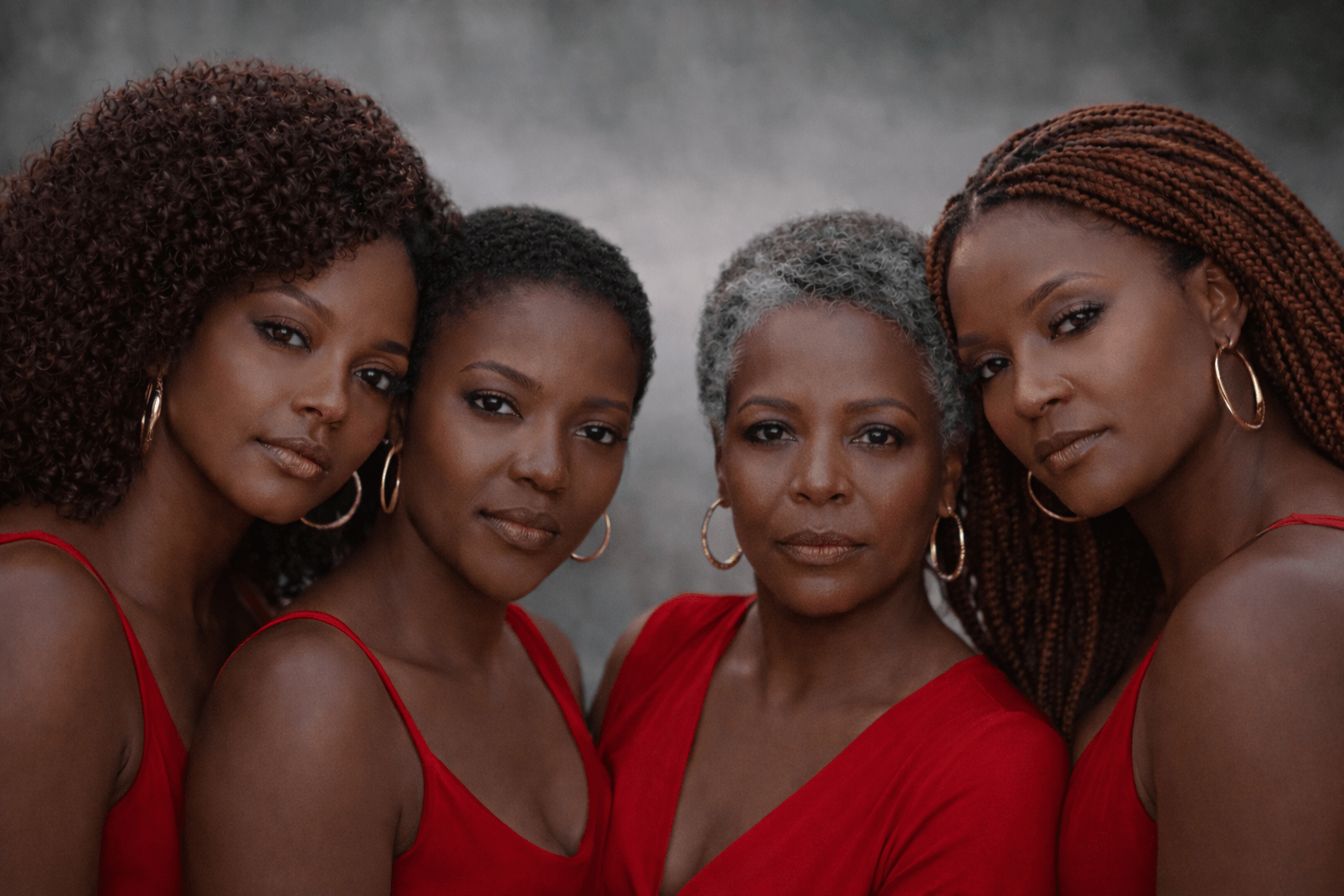
The acronym J-BG stands for Just-Black Girls. It represents non-biracial African American Black women.
Article II Mission and Purpose of the Acronym
Section 1: Mission
With this distinction, I endeavor to give visibility to a group of women who are unfairly seen (not just by R-O). The idea is not to put the spotlight on our professional achievements in education, at work, and as entrepreneurs. As a group, we are amassing accolades—but our pretty ways have been hidden. And while others believe we have shown who we are, I believe we’ve not had the opportunity to let down our braids or free our puffs, grab the remote, then curl up and binge-watch nothing but love stories for all the world to see. We’re perfect as we are, but R-O—and the world around us—can’t see that. Thus, it is my goal to harvest the energy of just-Black girls everywhere and use it to break the spell put on R-O and possibly change how he—and society—the world, sees us.
Section 2: Purposes
- I created J-BG to embrace the African American Black women who don’t have “good” genes—if you know what I mean.
- The term intends a playful, yet positive identity for the most marginalized group of Black women. We’re known as strong Black women and sistas, but I wanted to create another association that frames us differently. Not one predicated on needing the validation of a man to have self-worth, as we have proven, to our detriment in conversations about love and romance, that we don’t need men to be successful or to celebrate our beauty.
But it would be nice to have a man. Right?
And one that finds us as beautiful as any other group of women heralded for their beauty.
- J-BG is a big ol’ hug.
And I’m absolutely showing favoritism. For certain, my feelings as a dark-skinned J-BG are all up in the mix. And I’m shamelessly operating and coloring outside the lines of the usual tearless, intellectual conversations and commentary about us. I’m being this vulnerable on purpose, hoping all J-BGs can have a vulnerable moment safely. A moment to strip all the way down to our lacy unmentionables—because we don’t always want to show up wearing armor.
We want R-O to see us as wives and girlfriends, and sometimes, are you ready for it, a-r-t.
We are tired of being sistas; we desperately want to be sweethearts.
And that’s exactly why this space is necessary.
- It’s a space for women who have lived in the shadow of mixed chicks and White women since forever. And yes, I know I should say biracial instead of mixed chicks, but there is a whole haircare line branded “Mixed Chicks.” Besides, this is a raw conversation. There will be little to no tiptoeing around it.
- So, yes. J-BG is the provision of a space where non-biracial African American women can huddle up and discuss our reactions to the current narrative about J-BGs—and the resulting pain—without the common dismissals and comparisons that undercut our unique experience.
- As evidenced by the soft Black girl movement, non-biracial African American Black women are already on a quest to be seen as special—as alluring—as any curly-girl, redbone, or snow bunny. Sure, some people feel these terms objectify, but these terms are necessary for an authentic conversation about Black men’s preferences. I’m not using these terms to reinforce stereotypes—I’m just keeping it one hundred.
Besides, what about the acronyms like P.Y.T.? People don’t seem to mind that one. So, just like that one, I want J-BG to be fun and catchy and put non-biracial African American women on the map, a nickname that will insert us into the talks about women who are beautiful and desirable.
I live for the day when the first men say, “I only date J-BGs.
All in good fun, of course.
Article III Membership
Section 1: Summary
Another reason this distinction matters is that a significant number of the writings in this collection center on what some may say are superficial characteristics. Yet the reality for J-BGs is that the preferences of R-O are often, if not always, primarily superficial: skin tone, hair, and other physical characteristics, stereotyped and genetic.
Biracial and multiracial African American women and non-biracial African American Black women almost always inherit different superficial traits. I won’t pretend that these differences aren’t real—or that they don’t matter to R-O.
While personal traits and other problematic accusations are also the basis for many of these writings, beauty standards are unavoidable and are a recurring theme.
Section 2: Selection Rules
- J-BGs are the accused: “black and ugly,” “rough and tough,” “chickens,” “ghetto birds,” “nappy-headed bitches,” just “bitches,” “hypersexual hos,” “tricks,” “blue blacks,” “Angry,” “Average,” and the spitting images of “boys.”
- They may be Black, but biracial, multiracial, or “exotic” women are not J-BGs.
- J-BGs are Black women who are substantially devoid of privilege in current pop culture and society at large.
- J-BGs are currently being persecuted on social media by a growing number of radical R-Os.
- J-BGs stand among the most appropriated—and the most stereotyped—Black women.
- J-BGs exist across the entire rainbow of colors that make up African American women but draw the shortest stick if they are Crayola-brown or darker.
- Whether J-BGs opt to wear wigs, weaves, braids, or their natural hair makes no difference. As a matter of fact, J-BGs can even be lucky and have 4A hair.
- J-BGs are the baseline in this discussion—not a trend, not a movement, not a phase.
Article IV Code of Ethics
- J-BG is not about excluding mixed-race African American women from the conversation about the intimate relationships of Black women and Black men.
- Neither is it my intention to create a term that implies Black women with as little as a drop of Black blood are less Black—or not Black at all. Who am I to make that judgment?
- I also acknowledge that when an African American woman has light-skin privilege, that also does nothing to lessen her Blackness.
- In the end, regardless of what I intend, some will assume or believe that division is the function of the acronym. But in its simplest form, J-BG exists as shorthand for the women R-O doesn’t notice, date, or marry—and a solution to the fatigue of repeatedly writing “non-biracial African American Black women” throughout this series.
It’s not about erasing community.
It’s about giving identity to the unseen.
 Why Don't You See Me?